Week 2 Bible Study: Acts 3–4

Theme: Bold Witness and the First Opposition
📖 Text: Acts 3:1–4:31
1. Group Discussion Questions
- Why does Peter refuse credit for the healing at the temple, and why is that refusal essential to gospel witness?
- How do Acts 3–4 show both grace and confrontation operating together in faithful preaching?
- What role does the resurrection play in provoking opposition from the religious leaders?
- How does the church’s prayer in Acts 4 reshape our instincts about safety, comfort, and success?
- What does “boldness” look like in this passage, and how is it produced?
- Where might obedience to Christ require courage in your own context?
- Where do you personally feel pressure to stay quiet about your faith, and what fears surface when you consider speaking more openly about Jesus?
- How does the church’s prayer for boldness rather than safety challenge the way you usually pray in difficult or uncertain situations?
2. Opening Overview
Brief Summary
Acts 3–4 records a public miracle, a Christ-centered sermon, the arrest of Peter and John, and the church’s prayerful response to opposition. The gospel advances through proclamation, even as resistance emerges from those threatened by the authority of the risen Jesus.
Why This Text Matters for Christians Today
These chapters teach believers how to live faithfully when obedience to Christ brings misunderstanding or hostility. They show that boldness is not personality-driven bravado but Spirit-given confidence rooted in the resurrection of Jesus.
3. Background and Context
Author, Audience, and Date
Luke continues his orderly account to Theophilus and to the wider Gentile church. Acts was likely written around AD 60–62, describing events from the earliest days of the Jerusalem church.
Historical and Cultural Setting
The temple was the center of Jewish worship and public life. Daily prayer hours gathered large crowds, making it a natural place for public teaching. The Sadducees, who denied the resurrection, exercised significant control over the temple and felt directly threatened by apostolic preaching.
Literary Context Within the Book
Acts 3–4 follows Pentecost and shows the first major public confrontation between the church and Jewish authorities. It establishes a recurring pattern in Acts: miracle, proclamation, opposition, prayer, and renewed boldness.
Key Theological Themes
- The authority of the risen Christ
- Repentance and restoration
- The exclusivity of salvation in Jesus
- Obedience to God over human authority
- Prayer as the engine of bold witness
4. Exposition of the Text
A. Healing in the Name of Jesus (Acts 3:1–10)
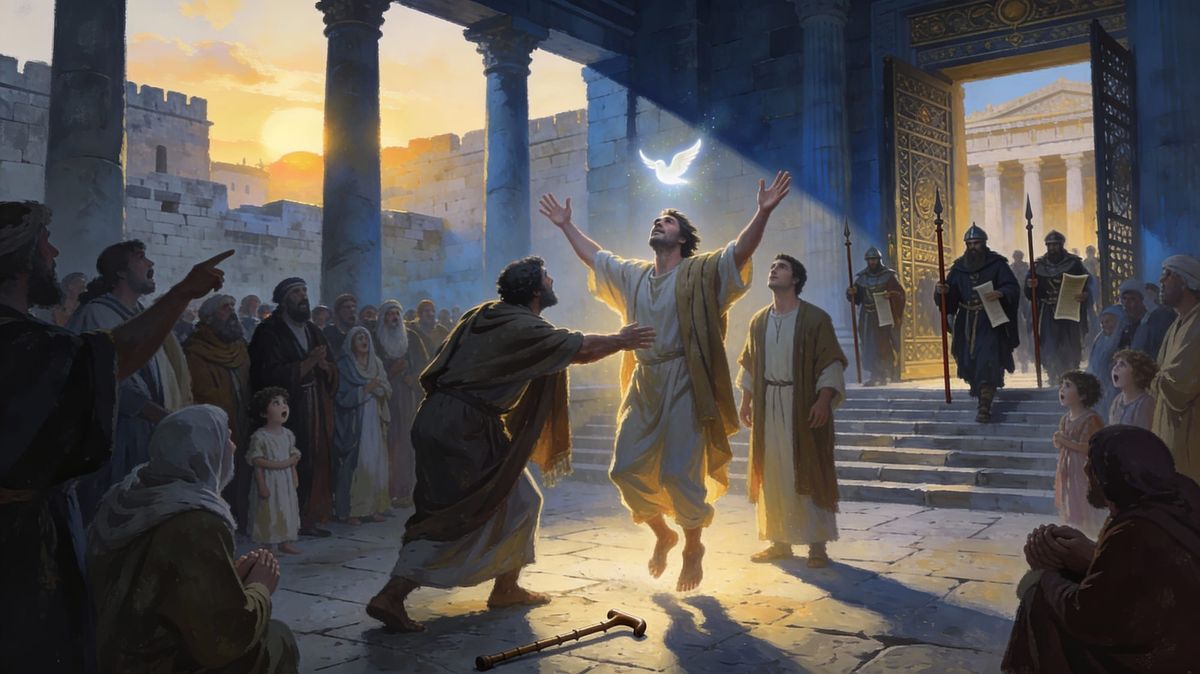
Peter and John encounter a man lame from birth at the temple gate. Peter offers no silver or gold but commands healing in the name of Jesus Christ.
The healing is immediate and complete, publicly confirming the authority of Jesus’ name. The miracle draws attention not to the apostles but to God’s redemptive power.
Gospel connection: Physical healing points to deeper spiritual restoration available through Christ.
B. From Miracle to Message (Acts 3:11–26)
Peter redirects the crowd’s amazement toward Jesus. He confronts them with their role in rejecting Christ while holding out hope through repentance.
Peter proclaims:
- Jesus was glorified by God
- Jesus was rejected and killed
- Jesus was raised from the dead
- Repentance brings forgiveness and restoration
Jesus is presented as the fulfillment of God’s covenant promises to Abraham. Salvation is rooted in God’s redemptive plan, not human merit.
C. Arrest and Testimony Before Authorities (Acts 4:1–12)
Peter and John are arrested for preaching the resurrection. When questioned, Peter boldly declares that salvation is found in no one else but Jesus Christ.
Acts 4:12 affirms the exclusivity of Christ not as arrogance, but as faithfulness to God’s revealed plan of salvation.
D. Obedience in the Face of Threats (Acts 4:13–22)
The authorities are astonished by the apostles’ confidence and recognize that they have been with Jesus. Unable to deny the miracle, they issue threats.
Peter and John respond that obedience to God must take precedence over human command. Their allegiance to Christ is clear and unyielding.
E. Prayer for Boldness, Not Escape (Acts 4:23–31)
The church responds to opposition with prayer. They acknowledge God’s sovereignty, quote Scripture, and ask for boldness rather than protection.
The Spirit fills them again, reinforcing that ongoing courage flows from continued dependence on God.
5. Voices from the Church
John Calvin
“When the world threatens, believers are strengthened by remembering that God reigns.”
Calvin helps frame the church’s prayer as grounded in God’s sovereignty.
Charles Spurgeon
“The boldness which is born of the Spirit is the boldness which honors Christ.”
Spurgeon captures the source and purpose of apostolic courage.
John Stott
“Opposition did not silence the church; it stimulated its witness.”
Stott summarizes the pattern Luke establishes in Acts 3–4.
D.A. Carson
“Prayer is the means by which God’s people align themselves with God’s purposes.”
This insight illuminates the church’s response to persecution.
6. Personal Study Questions
What is written in the text?
- What miracle occurs and how is it explained?
- What claims does Peter make about Jesus?
- How do the authorities respond?
What did this text mean to the original audience?
- Why would resurrection preaching provoke such opposition?
- How did this passage encourage believers facing threats?
- What did boldness signal about the Spirit’s work?
What does this text mean for Christians today?
- What does it teach about gospel faithfulness under pressure?
- How does it shape our understanding of prayer?
- Why is Christ’s resurrection central to Christian witness?
How does this text shape my life and walk with Jesus?
- Where might God be calling me to speak or act with courage?
- How does trusting God’s sovereignty address fear?
- What does obedience look like when it costs approval?
Closing Reflection
Acts 3–4 shows that the church’s confidence does not come from favorable conditions but from a risen Savior. Prayer fuels boldness, obedience glorifies God, and opposition cannot silence the gospel.
Say the word when you’re ready for Week 3: Acts 5–7, and I’ll continue using this same structure and theological framework.