Why Christians Are Often Confused When Members of the LDS Church Identify as Christian

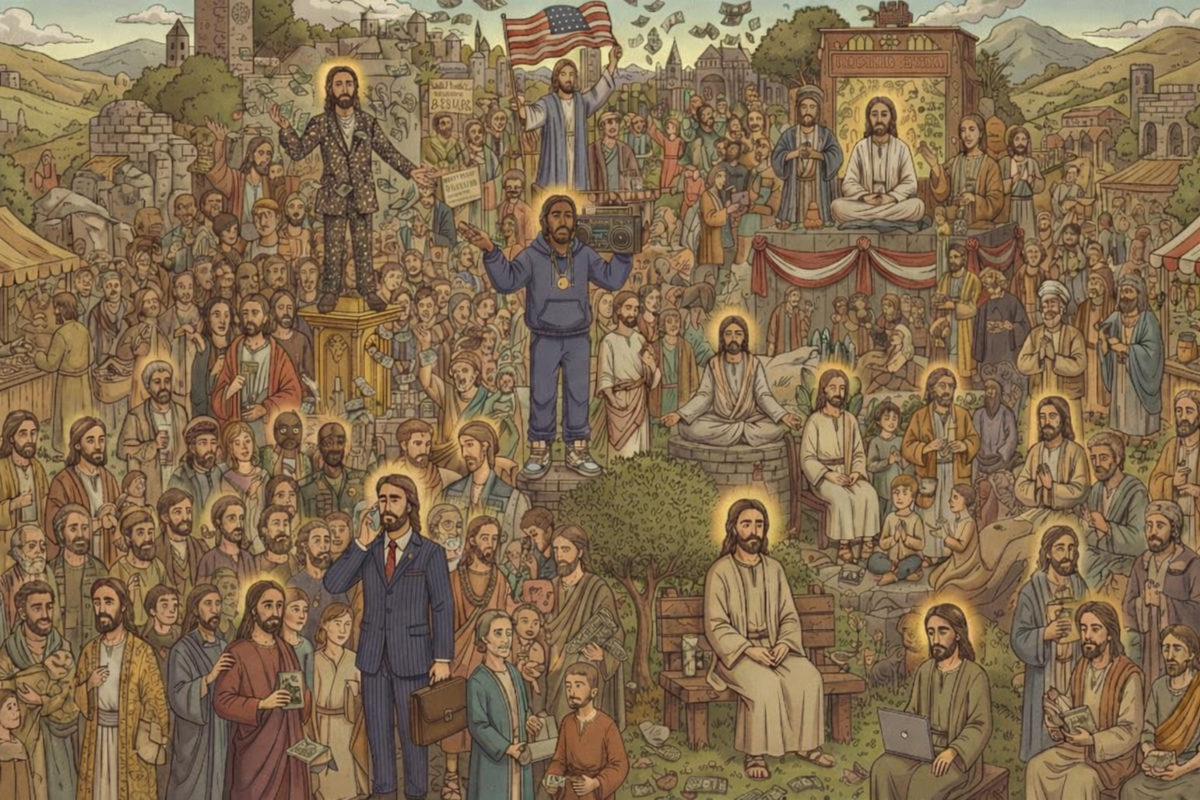
A friend recently asked me a question: Why don’t many Christians consider members of the Church of Jesus Christ of Latter-day Saints to be "Christians"?
This article is my attempt to answer that question from the perspective of historic Christianity. The goal is not to critique individual sincerity or argue who is right or wrong, but to explain why the word Christian has been understood differently by traditional Christian churches, and why that difference often creates confusion.
For brevity, I will refer to the Church of Jesus Christ of Latter-day Saints as the LDS Church.
What Does the Word “Christian” Mean?
The word Christian did not originate as a self chosen label. In the New Testament, it is a descriptive term used by outsiders.
In Acts, followers of Jesus were first called Christians in Antioch. The label referred to those who publicly identified with the apostolic message and confessed Jesus as Lord.
From that point forward, for roughly the next 2,000 years, "Christian" consistently referred to those within what we now call the Catholic, Eastern Orthodox, and later Protestant traditions. While these groups disagree on important issues, they have historically recognized one another as belonging to the same religion. One clear example is that they generally recognize each other’s baptisms as valid Christian baptisms. I'll refer to these three branches of Christianity as "Historic Christianity".
This continuity is also recognized outside the churches. Secular historians and scholars of religion typically classify the religions as in the Christian tradition while the LDS Church is commonly classified as a New Religious Movement, alongside groups such as Christadelphians, Christian Science, Jehovah’s Witnesses, and Seventh-day Adventists. This classification is descriptive, not derogatory, and reflects historical origin and theological distinctiveness rather than moral judgment.
So the question becomes: Do members of the LDS Church fit the historic definition of the term "Christian"?
For the traditions that have carried that name for nearly two millennia, the answer is generally no. There are many reasons, but I will focus on a few core ones writing primarily from the perspective of Protestant tradition and grounding the Christian beliefs is the old and new testaments and generally accepted interpretations.
Why Belief Comes Before Behavior
When discussing Christianity, it is tempting to focus on behavior. But behavior is a poor measuring stick for defining what a Christian is.
I have atheist, Muslim, and Buddhist friends whose lives often look more loving and self sacrificial than many self identified Christians. Christianity itself acknowledges this. The New Testament does not define Christian identity primarily by outward conduct, but by belief.
Paul writes in Romans that if one confesses with their mouth that Jesus is Lord and believes in their heart, they will be saved. Even in the earliest Christian writings, belief is central.
That does not mean behavior is unimportant. It means behavior flows from belief, not the other way around.
So if we want to understand why Christians draw boundaries around the word Christian, we must begin with belief, and specifically with belief about Jesus.
1 - The Central Question: Who Is Jesus?
For historic Christianity, the defining question has always been: Who is Jesus?
Catholic, Protestant, and Eastern Orthodox Christians share a common confession. They believe that Jesus is fully God and fully man, eternal, uncreated, and of the same divine nature as the Father. He did not become God. He has always been God. His saving work is therefore understood to be fully sufficient.
The LDS Church also speaks frequently and sincerely about Jesus, but it defines Him differently. These differences are not merely about vocabulary or emphasis, but about identity. Because Jesus stands at the center of Christian theology, differences here shape everything else, including salvation, grace, and human effort.
Comparing the Jesus of Historic Christianity and the Jesus of the LDS Church
Because Christianity is defined first by belief, and belief centers on Jesus, the most important place to begin is with who Jesus is understood to be.
The Jesus of Historic Christianity
Historic Christianity teaches that Jesus is:
- Fully God and fully man (Jn 1:1, 14; Jn 20:28; Col 2:9; Heb 1:3; Tit 2:13; Phil 2:6)
- Eternal and uncreated (Jn 1:14; Heb 2:14–17; Heb 4:15; Lk 2:52; 1 Tim 2:5; Rom 5:19)
- Of the same divine nature as the Father (Jn 1:1–3; Jn 8:58; Col 1:16–17; Heb 1:2–3, 10–12; Rev 1:8, 17–18; Mic 5:2)
- Not a being who progressed into divinity (Jn 10:30; Jn 14:9–11; Jn 5:18; Col 1:15–19; Heb 1:3; Phil 2:6)
This confession is rooted in the New Testament and was formalized early in Christian teaching. Christians believe that because Jesus is fully divine, His atoning work is fully sufficient. Salvation is accomplished by Christ and received by faith.
This is also where Jesus’ Jewish context matters. Historic Christianity understands itself as flowing directly out of Judaism. Jesus was Jewish, His earliest followers were Jewish, and the world He entered was uncompromisingly monotheistic. Central to Jewish belief is the Shema in Deuteronomy 6:4:
“Hear, O Israel: The Lord our God, the Lord is one.”
This was not a peripheral idea. It was the defining confession of Israel.
So when Christians confess Jesus as Lord, they do not believe they are adding a second god. They believe Jesus shares in the one divine identity of the God of Israel. The doctrine of the Trinity emerged not as a rejection of monotheism, but as a way to articulate how Jesus could be worshiped without abandoning the Shema.
The Jesus Taught by the LDS Church
The LDS Church teaches devotion to Jesus and obedience to His teachings. Where confusion arises is that the LDS Church defines Jesus differently than historic Christianity does.
According to official LDS teaching, Jesus is not eternally God in the same sense as the Father. He is understood as a distinct being who existed as a spirit child of God the Father and progressed to godhood. God the Father Himself is taught to have once been a man who attained exaltation. Divinity, in this framework, is something achieved rather than eternally possessed.
These teachings appear in LDS scripture, manuals, and official essays. The LDS Gospel Topics Essay Becoming Like God explicitly affirms eternal progression:
Just as a child can develop the attributes of his or her parents over time, the divine nature that humans inherit can be developed to become like their Heavenly Father’s.
Early LDS leaders, including Joseph Smith, Brigham Young and Lorenzo Snow, taught that God was once as humans are now and that faithful humans may become as God is.
“As man now is, God once was: As God now is, man may be” - Lorenzo Snow
(Snow, Eliza R. Biography and Family Record of Lorenzo Snow. Salt Lake City, 1884, p. 46).
In LDS theology, Jesus is divine, but not eternally divine in the historic Christian sense. He is not of the same uncreated essence as the Father, but part of a broader divine family structure rather than the unique, eternal Son.
Why This Difference Matters to Christians
From the LDS perspective, these distinctions may feel technical. From the Christian perspective, they are foundational.
If Jesus is not eternally God, then His atonement cannot fully and finally reconcile humanity to God on its own. Something else must complete the picture. For Christians, this represents a categorical shift rather than a variation within the same tradition. It places the LDS understanding of God outside the historic boundaries that have defined Christianity.
Christians do not hear this as a disagreement about emphasis. They hear it as a fundamentally different gospel built on a fundamentally different Jesus. At a minimum, these belief systems are mutually exclusive and cannot both be true.
This is why Christians often say that the LDS Church teaches a different Jesus, even though the same name is used and many moral teachings overlap. It is not about disrespect. It is about definition.
Why This Leads to Confusion Around the Word “Christian”
When members of the LDS Church identify as Christian, they are using the word differently than historic Christianity has meant by it. From the LDS perspective, belief in Jesus and devotion to His name make the label feel appropriate.
From the Christian perspective, belief in who Jesus is has always been the defining boundary. Because the LDS Church’s understanding of Jesus differs at that core level, Christians do not recognize it as belonging to the same theological tradition, even when the moral lives of LDS members look deeply admirable.
This difference alone explains much of the confusion.
2 - Sin and the Human Condition: A Christian and LDS Contrast
Historic Christianity
Historic Christianity understands sin primarily as a relational rupture between humanity and God.
Paul writes in Romans that “all have sinned and fall short of the glory of God.” Rom 3:23
And in the old testament, the prophet Jeremiah said
"The heart is deceitful above all things, and desperately sick; who can understand it?" Jer 17:9
Sin is not first a failure to meet a moral standard, but a falling short of God Himself.
Isaiah describes the result plainly: “Your iniquities have made a separation between you and your God.” In Christian theology, this separation cannot be repaired through effort or discipline. Relationship with God has been broken at a level deeper than behavior. It is why we cannot see God or be in his presence. Human sin has literally separated all of humanity from God.
Christianity therefore begins not with self improvement, but with the recognition that something essential has been fractured. Restoration must come from God’s initiative rather than human effort.
The LDS Church
The LDS Church approaches sin differently. Stephen E. Robinson writes in LDS Doctrine Compared with Other Christian Doctrines that humanity is not understood to be fundamentally fallen or incapacitated by sin. Human intelligence is described as eternal and uncreated, and human beings are viewed as capable moral agents with genuine power to choose good or evil.
The Fall of Adam did not totally incapacitate humans from doing any good thing—they remain able to choose and to perform either good or evil. Moreover, Latter-day Saints accept the concept of the “fortunate Fall” (mea culpa). The Fall was a necessary step in the progress of humanity."
https://rsc.byu.edu/latter-day-saint-essentials/lds-doctrine-compared-other-christian-doctrines
In LDS teaching, the Fall of Adam is not primarily tragic but necessary and even positive. The Book of Mormon states,
“Adam fell that men might be; and men are, that they might have joy.” 2 Nephi 2:25
Sin represents obstacles within a larger process of growth rather than a fundamental severing from God.
Christians hear these as two different starting assumptions.
Christianity begins with broken relationship that must be restored by God. LDS theology begins with spiritual potential that must be developed with God’s help.
That difference directly shapes how salvation is understood.
3 - Salvation
Salvation in Christianity: Restoration and Life in God’s Kingdom
To understand salvation in Christianity, it helps to step back and see the story the Bible is telling.
In Genesis 1-3, humanity lives in direct relationship with God. When sin enters, the immediate consequence is separation. Adam and Eve are driven out, not because God has abandoned them, but because something essential has been broken. From that point forward, Scripture tells the story of God restoring what was lost.
God forms a people through Israel. He dwells among them in the tabernacle and later the temple. Sacrifices are given as signs pointing toward something greater, but access remains limited and mediated.
Christianity understands Jesus as the fulfillment of this story. Through His life, death, and resurrection, the barrier between God and humanity is removed. Salvation is not primarily about avoiding punishment, but about restored relationship. It's not just the avoidance of Hell, but also full inclusion into the the kingdom of God and restored relationship with the Father, Son and Holy Spirit. Because this is an God
This is why Christians speak of salvation as something that happens now. When a person places their faith in Jesus, they are reconciled to God and brought into His kingdom.
2 Corinthians 5:18-19 explains God "reconciled us to Himself through Christ," giving believers the ministry of reconciliation as a present reality.
Romans 5:1 affirms, "having been justified by faith, we have peace with God through our Lord Jesus Christ."
He rescued us from the domain of darkness, and transferred us to the kingdom of His beloved Son, in whom we have redemption, the forgiveness of sins. Col 1:12-14
And in that kingdom, God no longer dwells in a building made by hands. He dwells in His people by the Holy Spirit ( Who is also affirmed to be God in the New Testament see Acts 5:3-4).
At the moment of faith and , a person is fully reconciled. They are not placed on a path toward eventual acceptance. Relationship itself has already been given. They have full spiritual access to the Father and there is nothing further that can be gained.
Christians expect growth in holiness and obedience, and a future where the physical world and spiritual world are fully reconciled. But that growth does not change access to God. Good works are responses to grace, not steps toward acceptance.
The Bible ends where it began. In Revelation, God again dwells fully with humanity. There is no temple because God Himself is present. Relationship is restored. The kingdom is complete.
From beginning to end, salvation in Christianity is about God reclaiming a people for Himself through His own initiative, grace, and presence.
So when a Christian says salvation is by faith alone, they do not mean only avoiding hell, though that is included. They mean being brought into God’s restored kingdom, living in relationship with Him as His people, with God dwelling among them forever. The Bible also teaches that those who remain unreconciled to God and reject Jesus as Lord remain outside that kingdom.
Salvation in the LDS Church: Progression, Covenant, and Exaltation
The LDS Church affirms that salvation comes through Jesus Christ and that His atonement is essential. At the same time, LDS theology defines salvation differently, both in scope and purpose.
In one sense of the word, the LDS Church teaches that all people are saved because of Christ’s resurrection, meaning all humanity is saved from physical death. The LDS Church explains, “through the Atonement and Resurrection of Jesus Christ, all people will be resurrected—saved from physical death.” This point often creates confusion in conversations between historic Christians and members of the LDS Church, because historic Christianity uses the word salvation in a much broader and deeper sense.
The LDS understanding of salvation is summarized in the Third Article of Faith, which states:
“We believe that through the Atonement of Christ, all mankind may be saved, by obedience to the laws and ordinances of the Gospel.” 3rd Article of Faith
In this framework, salvation is connected not only to Christ’s work, but also to human obedience and covenant faithfulness. The LDS Church further teaches that salvation from sin cannot be obtained by faith alone:
Individuals cannot be saved in their sins; they cannot receive unconditional salvation simply by declaring a belief in Christ with the understanding that they will inevitably commit sins throughout the rest of their lives. LDS Church On Salvation, paragraph Salvation From Sin
According to official LDS teaching, salvation is not a single completed act of restoration, but a process of progression through covenant faithfulness over time. If that progress stops, salvation can be lost. As the LDS Church explains:
Those who have been baptized and have received the Holy Ghost... have been conditionally saved from sin. In this sense, salvation is conditional, depending on an individual’s continuing in faithfulness, or enduring to the end in keeping the commandments of God. LDS Church on Salvation
Salvation and the Human Story
LDS theology teaches that human beings existed as spirit children of God before mortal life. Mortal life is a necessary stage of development where individuals gain bodies, exercise moral agency, and prove faithful through obedience.
The Fall is viewed as necessary and positive rather than tragic rupture. Sin represents setbacks in a larger process of growth addressed through repentance, obedience, and covenant keeping.
Levels of Salvation and Exaltation
LDS doctrine distinguishes between general salvation and exaltation.
General salvation refers to resurrection and a degree of glory made possible for all humanity through Christ’s atonement. Doctrine and Covenants 76 describes multiple degrees of glory: celestial, terrestrial, and telestial kingdoms.
“The glory we inherit will depend on the depth of our conversion, expressed by our obedience to the Lord’s commandments.” -Dallin Oaks
Exaltation, sometimes referred to as eternal life, involves living in the presence of God the Father and continuing eternal progression. It is reserved for those who enter into and faithfully keep sacred covenants, including temple ordinances.
Covenants, Worthiness, and Progression
Central to LDS salvation is covenant cooperation. God offers grace, and humans respond through obedience. Robinson notes that LDS theology rejects the idea that God moved first in the hearts of the fallen (prevenient or irresistible grace), emphasizing human agency.
This is why worthiness plays a significant role. Temple participation, essential for exaltation, requires adherence to moral and behavioral standards through worthiness interviews. Progression toward exaltation is inseparable from demonstrated faithfulness.
God’s Kingdom and the Future
While the LDS Church speaks of God’s kingdom, it is generally oriented toward a future perfected state rather than a present spiritual reality as is the case in historical Christianity. Full participation in God’s presence is attained through faithfulness over time rather than fully realized now.
4 - The Purpose of Life: Glory Received or Worthiness Proven
Another way to understand why Christians and members of the LDS Church often speak past one another is to ask what each tradition believes life is for.
The Christian Understanding of the Purpose of Life
In historic Christianity, the purpose of life is not spiritual ascent or proving worthiness. It is relationship.
Humanity was created for communion with God. The Westminster Catechism summarizes this by saying humanity’s chief end is “to glorify God and enjoy Him forever.” Life is about knowing God and living within His kingdom.
Because salvation restores relationship fully, the Christian life is not oriented toward earning a future status. Obedience and sanctification matter deeply, but as an expression of love, gratitude and growth, not as a step toward higher standing.
Christians do good works not to become something more, but because they already belong.
The LDS Understanding of the Purpose of Life
The LDS Church teaches mortal life as a stage in an eternal process of progression. Human beings are here to gain bodies, exercise agency, and demonstrate faithfulness through obedience.
“Life on earth is regarded as a temporary state in which men and women are tried and tested, and where they gain experiences obtainable nowhere else.”
https://newsroom.churchofjesuschrist.org/article/frequently-asked-questions
Within LDS theology, life functions as a proving ground. Covenants and faithfulness determine eternal outcome and degree of glory. Exaltation involves becoming worthy of the highest relationship with God.
From the LDS perspective, this preserves agency and gives meaning to moral effort. From the Christian perspective, it represents a fundamentally different understanding of why life exists.
Why Christians Hear These as Two Different Visions
Christians hear these two accounts of life’s purpose as pointing in opposite directions.
Christianity begins with the belief that everything necessary for restored relationship with God has already been accomplished by Christ. Life is therefore about faithfulness within grace.
LDS theology begins with the belief that life exists to enable progression toward exaltation. Life is therefore about faithfulness toward a future outcome.
Both traditions value obedience, sacrifice, and devotion. The difference lies in what those things are for.
That difference helps explain why Christians and members of the LDS Church often use similar language while meaning very different things, and why historic Christian churches do not apply the word Christian in the same way.